
Form your business entity — LLC, corp, or other (any state)
Turn a scratch idea into a real company the federal government can pay: choose a structure, file with your state, get a free EIN, and open a business bank account — before SAM.gov.
Why this comes before SAM.gov
Federal systems do not create your company for you. SAM.gov, SBIR.gov, and DSIP all expect a real legal identity: a legal name, a taxpayer ID, a physical address, and (for payments) a business bank account. If those do not exist yet — or do not match each other — registration stalls.
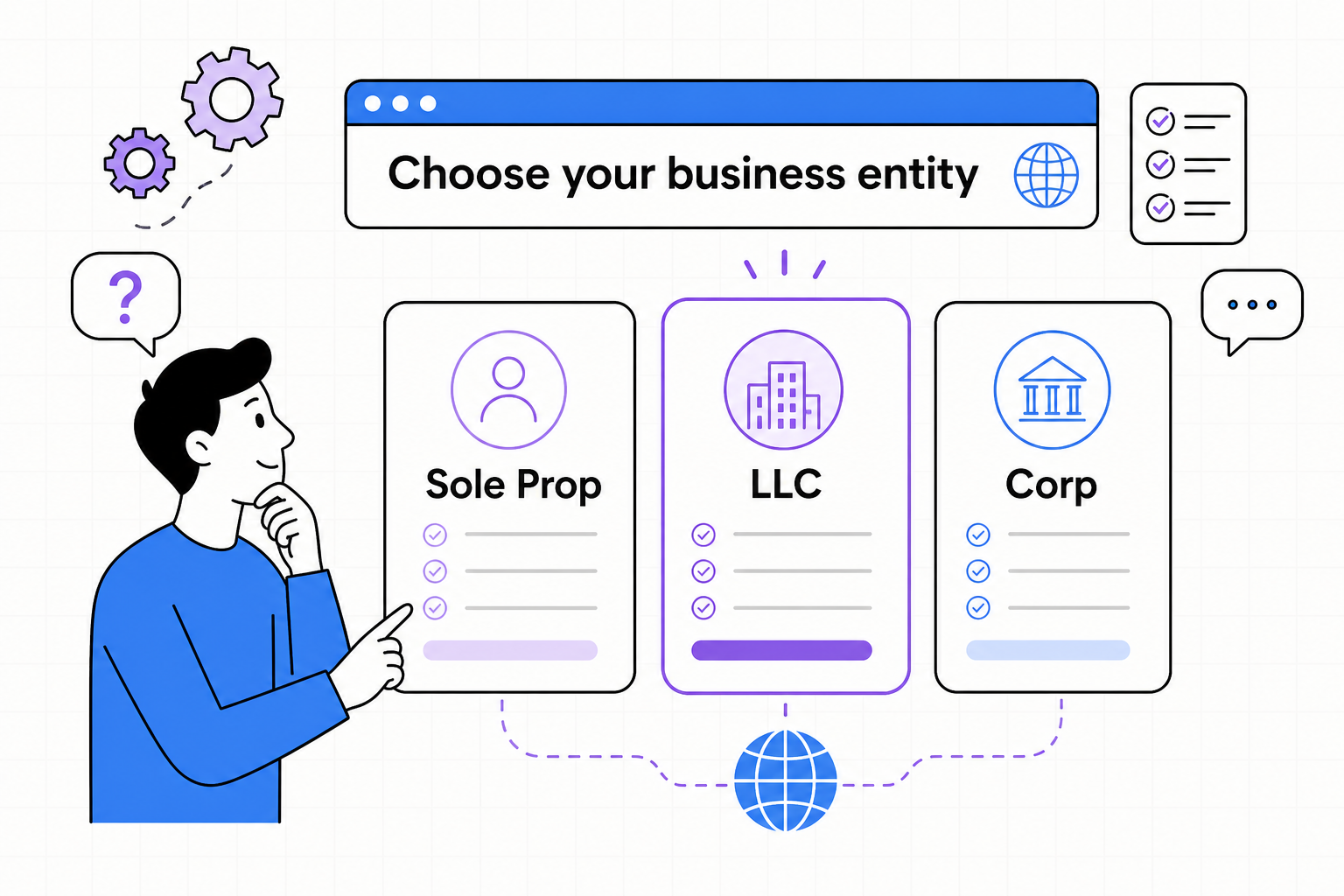
Choose a business structure
Your structure affects personal liability, taxes, paperwork, and how ownership looks later for small-business and SBIR eligibility. You can convert later in many cases, but conversion has cost and friction — pick carefully once.
| Structure | Good for | Liability | Typical tax picture |
|---|---|---|---|
| Sole proprietorship | Testing an idea; one owner; low formalities | Unlimited personal liability | Reported on personal return; self-employment tax |
| Partnership | Two+ owners starting together | Often personal liability (unless LP/LLP) | Pass-through to partners |
| LLC | Most first-time federal contractors with personal assets to protect | Members generally not personally liable | Usually pass-through; can elect corporate taxation |
| C corporation | Raising outside capital; complex ownership | Shareholders generally not personally liable | Entity-level tax; possible double tax on dividends |
| S corporation | Eligible corps wanting pass-through treatment | Same as corp liability protection | Pass-through if IRS S election accepted; ownership limits apply |
Register with your state
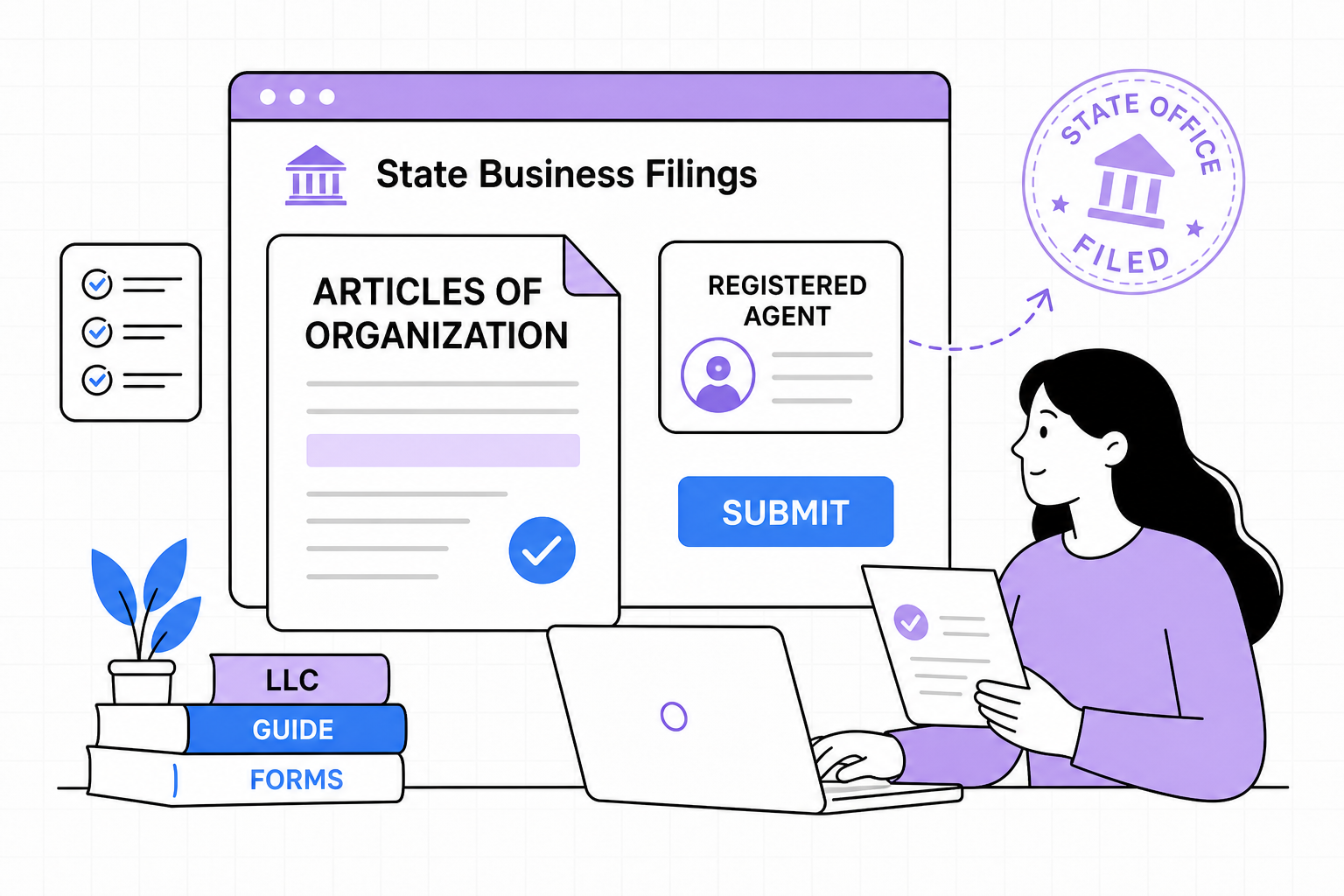
LLCs, corporations, partnerships, and nonprofits generally register with the state where they are formed — usually the Secretary of State, business bureau, or similar office. Sole proprietors may only need a local license or DBA (“doing business as”) if they use a trade name.
- 1Pick a formation state
Default to the state where you live and will operate. Forming in another state often means “foreign qualifying” back home — extra filings and fees. Fancy out-of-state formation is rarely needed for a first federal contractor.
- 2Check the name
Search your state’s business name database. The name must be available and usually must include an entity designator (LLC, Inc., etc.). Reserve the exact spelling you will use everywhere.
- 3Appoint a registered agent
Most states require a registered agent with a physical in-state address to receive legal papers. You can often serve as your own agent if you meet the rules — or hire a service.
- 4File formation documents
LLC: Articles of Organization. Corporation: Articles of Incorporation. Pay the state fee. Keep the stamped/approved copy — banks and SAM validators ask for it.
- 5Adopt an operating agreement or bylaws
Even a single-member LLC should document who owns what and who controls decisions. Clear ownership records matter later for SBIR eligibility, certifications, and Foreign Risk Evaluation.
Get an EIN and open a business bank account
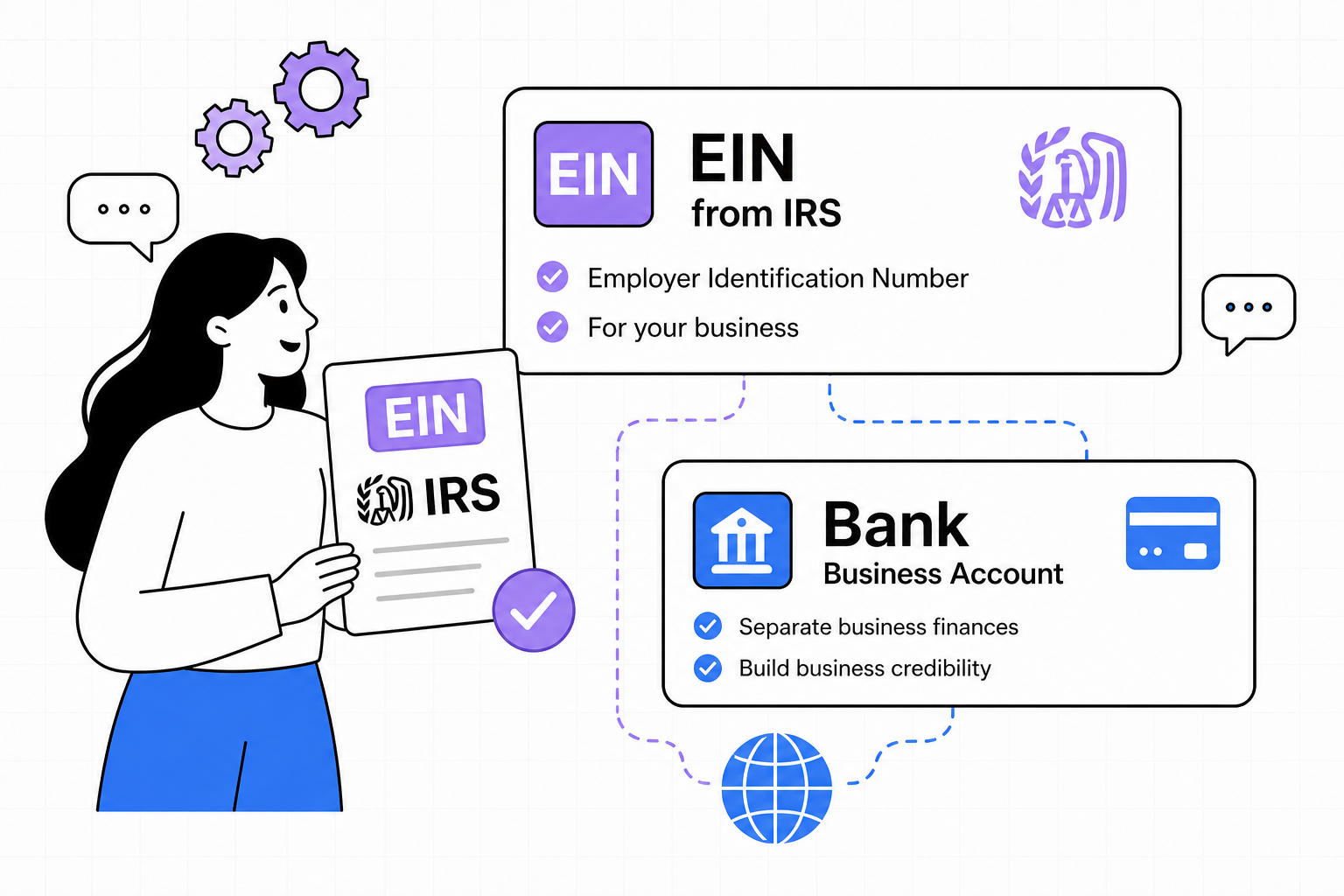
Your Employer Identification Number (EIN) is the federal tax ID for your business — like a Social Security number for the company. You need it to open a business bank account, hire, and register in SAM.gov. Apply free on the IRS site after you form the entity. Do not pay a third-party website for an EIN.
- 1Apply for an EIN (free)
Use the IRS online EIN assistant with the responsible party’s SSN/ITIN and your exact legal name. Save the confirmation letter (often CP 575 or a 147C later). That letter is your source of truth for SAM name/TIN matching.
- 2Check state tax IDs
Some states require a separate state tax ID for sales tax, employer withholding, or franchise tax. Follow your state revenue department — not a one-size federal form.
- 3Open a business bank account
Bring formation documents, EIN letter, ownership IDs, and (if asked) operating agreement. The account name should match the legal entity. SAM electronic payments go to this account — keep it clean and business-only.
- IRS EIN confirmation letter saved (PDF)
- Business checking account in the legal name
- Routing and account numbers ready for SAM EFT
- Physical street address (not a PO Box) for the entity
- Formation document + operating agreement in a permanent folder
Licenses, permits, and local basics
Depending on what you sell and where you work, cities and counties may require a general business license, professional license, or home-occupation permit. Federal contracting does not replace those local rules. Use SBA’s license guidance and your city/county site — do not guess from a blog.
You are ready for SAM.gov
- Legal structure chosen and filed (or sole prop path understood)
- Exact legal name locked and used consistently
- EIN issued; confirmation letter on file
- Business bank account open in the legal name
- Physical address and ownership list accurate
- Operating agreement / bylaws filed internally